


Microplastics in the Watershed;
A Community Response

This innovative project is an ever-evolving example of how community-based research can yield impactful scientific data. With input from wilderness expedition water sampling, area beach and waterway cleanup efforts, and ongoing Middle School microplastic workshops, this page is an effort to coordinate and present real-time information about plastic in the Puyallup River watershed and the city of Tacoma.

Puyallup Watershed Microplastics Study
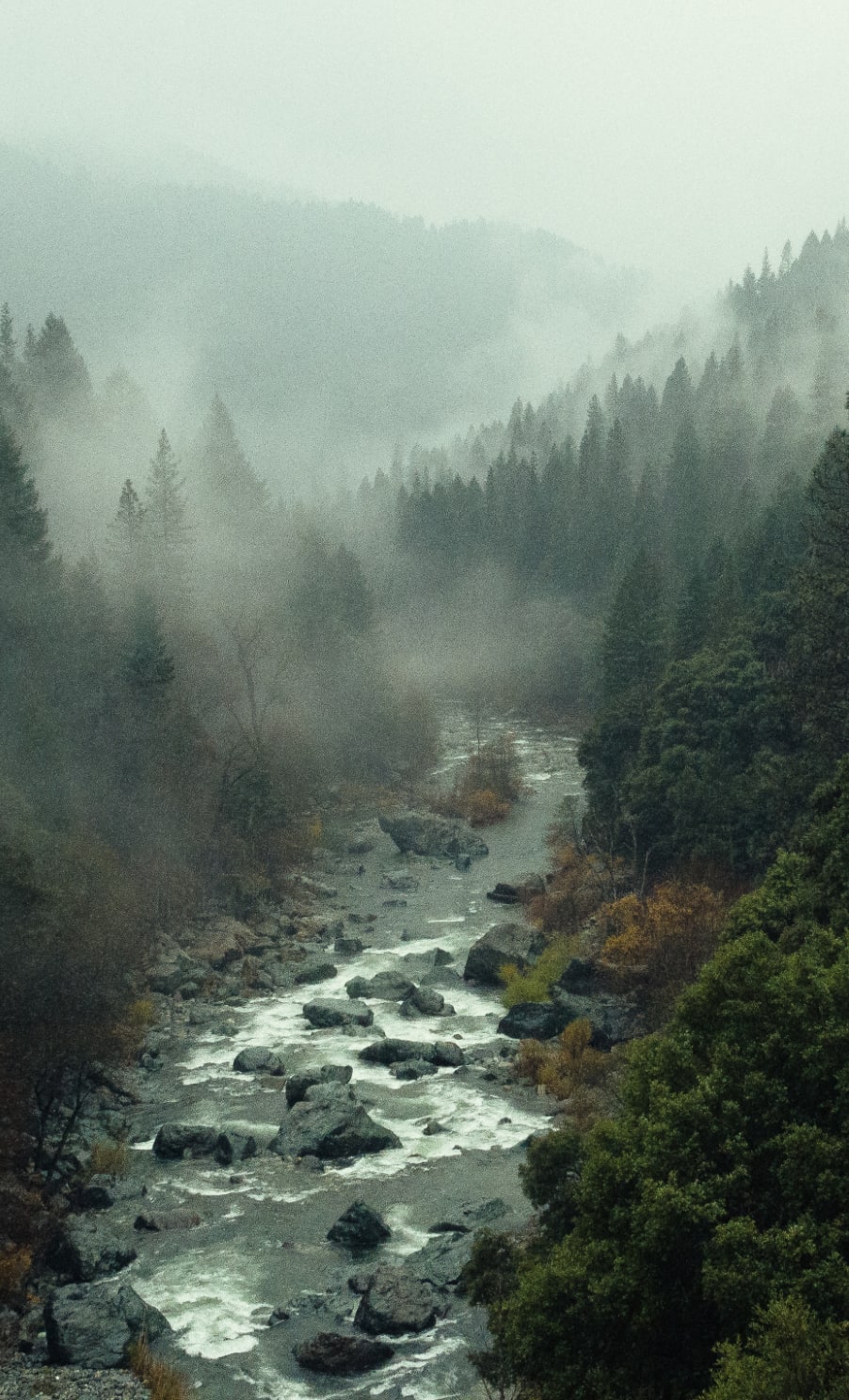
The Puyallup River runs from the flanks of Mount Rainier to the waters of Tacoma's Commencement Bay. From the Puyallup Glacier down into the lower elevations, hundreds of creeks and streams feed into the growing river, along with the flows of the White and Carbon Rivers, until the Puyallup meets the brine of Puget Sound along Tacoma's waterfront.
This ongoing study focuses on the Puyallup watershed and the city of Tacoma. (Although some portions of Tacoma are within the watershed, others are not. For the sake of simplicity, the balance of the city is included in the program.)
This program can be accessed by community groups, organizations, schools and individuals throughout the watershed. Involves collection and analysis of samples by participants from waterways near their homes and in their immediate communities. Samples are collected according to protocol and analyzed using digital microscopes under ambient and UV light.
Microplastic Workshops
 01
01
Education
The Ikkatsu Project's Middle School programs provide excellent water samples throughout the watershed while giving students an understanding of how plastic has become such an ever-present part of our lives. A variety of collection locations, on public and private property, in fresh and salt water, continues to yield diverse data points and connect students to their environment in a unique and lasting way.

 02
02
Knowledge
Along with additional information collected on water and sediment quality, this page provides data that links locations around the watershed in a way that shows differences in concentrations and may help identify sources of microplastic pollution.
 03
03
Participants
This program is open to schools, church and community groups, and individuals throughout the Puyallup watershed. For more information, contact the Ikkatsu Project.
 04
04
Connections
Programs like this not only give participants an understanding of scientific field study and data analysis but also provide powerful connections to the world they live in and the ways that nature impacts each of our lives.

 OUR SERVICE
-
our service
 what we do
our service what we do
our service what we do
our service what we do
our service what we do
what we do
our service what we do
our service what we do
our service what we do
our service what we do
The first step is to conduct a thorough assessment of the watershed, examining factors such as water quality, ecosystem health, and any existing environmental stressors or threats. This comprehensive analysis provides a baseline understanding of the watershed's current condition, allowing restoration efforts to be strategically targeted.
Stakeholders from the local community, government agencies, and conservation organizations come together to develop a detailed restoration plan. This collaborative approach ensures that all perspectives and interests are taken into account, leading to a more holistic and effective strategy.
Implementing the restoration plan through on-the-ground actions, such as replanting native vegetation, removing invasive species, improving water management infrastructure, and mitigating sources of pollution.
Ongoing monitoring and evaluation are essential to track the progress of the restoration efforts and make any necessary adjustments along the way.
Preserving Nature's Lifeline

Samples collected
6,068
Species helped
38,768
Ripple effects
1,193,210

Get Involved Now
We Have
The Power Today To
Change Tomorrow
 our client’s feedback
foresty loves people

Kenneth S. Fisher
Marketing Managerposuere luctus orci. Donec vitae mattis quam, vitae tempor arcu. Aenean non odio porttitor, convallis erat sit amet, facilisis velit. Nulla ornare convallis

Jennifer R. Tanaka
Marketing Managerposuere luctus orci. Donec vitae mattis quam, vitae tempor arcu. Aenean non odio porttitor, convallis erat sit amet, facilisis velit. Nulla ornare convallis
Kenneth S. Fisher
Marketing Managerposuere luctus orci. Donec vitae mattis quam, vitae tempor arcu. Aenean non odio porttitor, convallis erat sit amet, facilisis velit. Nulla ornare convallis